What the Door Is Doing and What It Usually Means
Door won't move and the motor hums
A broken spring, a jammed curtain or a failed part in the operator
Door goes down, then reverses
Safety eyes out of line, a damaged bottom sensing edge, or something in the way
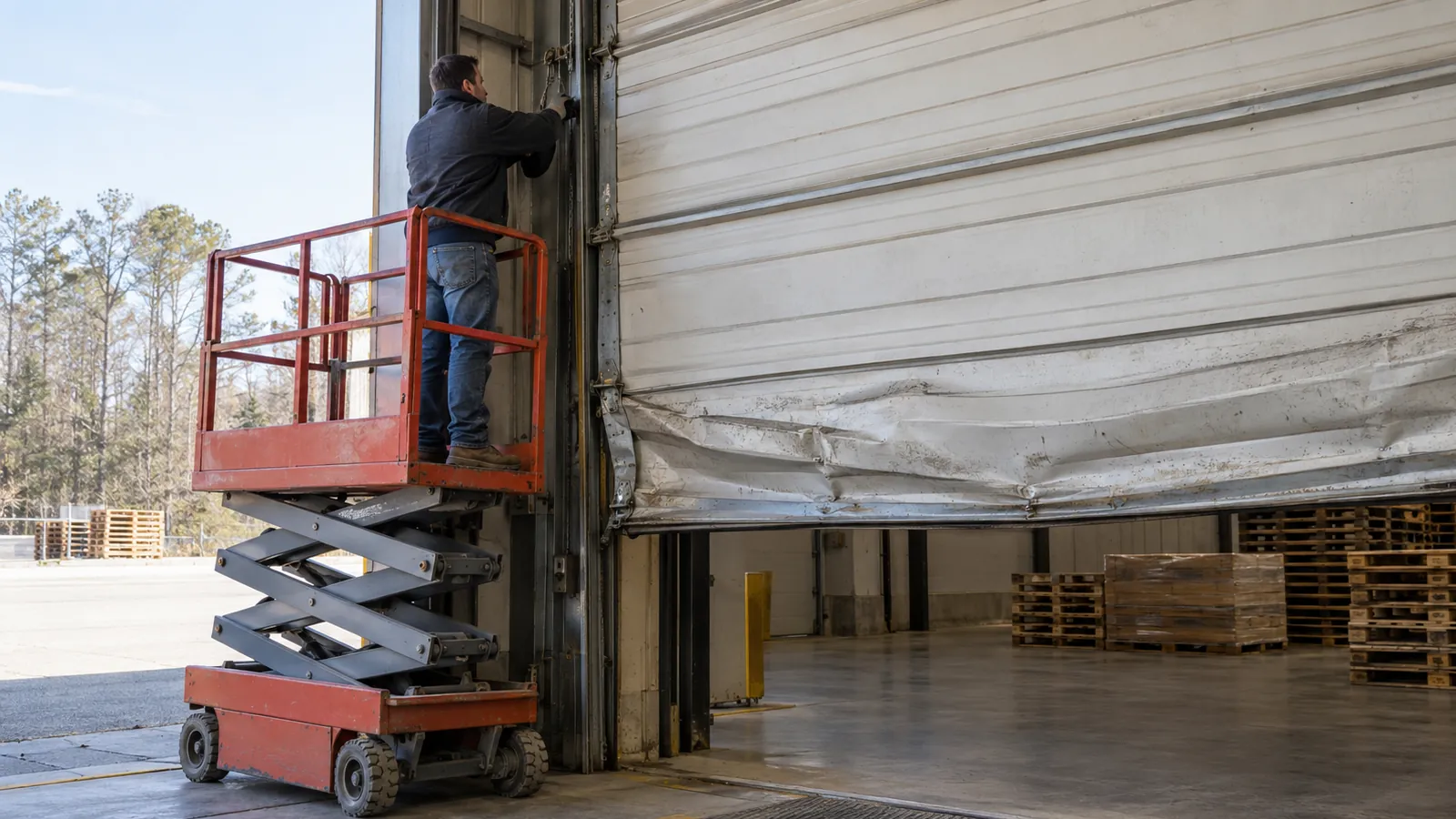
Bottom bar bent or one side hanging low
Impact from a truck or forklift, or a broken cable on a sectional door
Curtain slats pulled out of the side guides
A hit, wind, or a door run while something blocked it
Grinding, popping or jerky travel
Worn rollers or bearings, a dry chain, or a spring near the end of its life
Door drifts open or slams shut
Spring tension is off and the door is out of balance
What Breaks on Commercial Doors
A commercial door may open and close dozens of times a day, every day. Parts that would last years on a home door wear out much faster. Impact is the other big cause. Trucks back into tracks and forklifts clip bottom bars.
- Springs reach the end of their cycle life and break.
- Tracks and guides get bent, so the door binds or comes off.
- Bottom bars and seals are crushed or torn, letting in water and pests.
- Operators lose limit settings, burn out a motor or fail a safety check.
- Slats and panels are dented or split.
Safe Things to Do Before the Tech Arrives
- Stop running the door. Repeated tries can bend more track or burn out the motor.
- Keep people and vehicles out of the doorway.
- Check that the operator has power and that nothing is blocking the safety eyes.
- Take photos of any damage, which helps with the quote and any insurance claim.
- Note the door type, its size and any name on the operator.
If the door has a manual chain or crank, use it only if the door moves freely. If it fights you, stop.
What a Technician Checks
A good commercial tech looks at the whole door, not only the broken part. That means spring condition and balance, cables and drums, the track or guides, the bottom bar and seal, the operator, and the safety devices.
Expect a written price before the work starts, with parts and labor split out. On a door that's been hit, ask whether the track can be straightened or needs replacing.
Repair or Replace
A door that's been hit more than once, has a rusted bottom section or uses parts that are no longer made may be cheaper to replace than to keep patching. The roll up doors and commercial overhead doors pages cover the options.
Preventive Maintenance
Many businesses put busy doors on a regular service visit, often once or twice a year, more for doors that run all day.
A visit covers lubrication, balance, spring checks, safety tests and adjusting the operator. It costs far less than a door stuck shut on a delivery day.
Fire rated rolling doors are a special case. They need yearly inspection and drop testing under the fire door standard, and the fire marshal can ask to see the records.
Problem with the motor itself? See commercial door operators. For a door that's stuck now, request a call back or call (919) 555-0136.