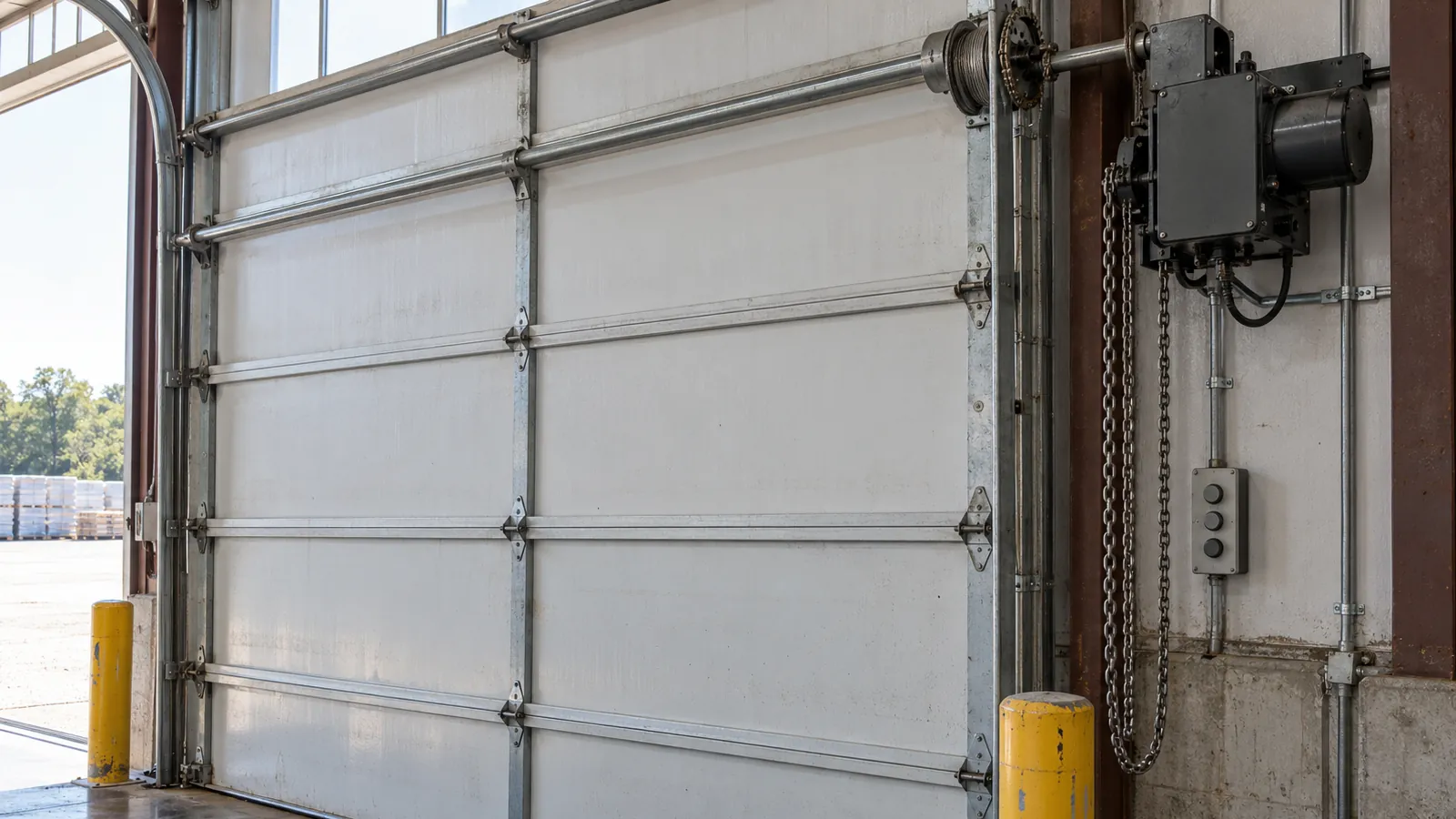
Types of Commercial Operators
Trolley operators hang from the ceiling and pull the door along a rail, like a home opener built much heavier. They suit standard lift sectional doors.
Jackshaft operators mount on the wall beside the door and turn the spring shaft directly. They leave the ceiling clear and work with high lift and vertical lift doors.
Hoist operators mount beside the door with a chain so the door can still be raised by hand when the power is out. They're common on roll up doors.
Picking the Right One
- Door type, size and weight
- How many times a day the door runs
- The power in the building, single phase or three phase
- Whether the door needs a manual backup for power outages
- Controls you want, such as push buttons, remotes, keypads, timers or links to an access system
An operator that's too small for a busy, heavy door will overheat and wear out early. Duty rating matters as much as horsepower. Ask the installer how many cycles per hour or per day the operator is built for.
Safety Devices
Current safety standards require commercial operators to have monitored safety devices, such as photo eyes or a sensing edge on the bottom of the door, before the door can close on its own.
If a device fails, the operator should refuse to close except with constant pressure on the button.
Never bypass a safety device or tape a button down to keep a door running. If it's acting up, that's a service call.
Common Faults
- Door stops or reverses because the photo eyes are knocked out of line
- Door stops short or runs past its stop because the limits drifted
- Motor hums but nothing moves, often a broken spring or a drive part
- Remote or button dead, sometimes a control board or a wiring fault
- Operator trips on overload, usually a door out of balance
Before blaming the operator, a good technician checks the door itself. An unbalanced door with weak springs will wear out any motor. The commercial door repair page lists those signs.
Repair or Replace
Older operators may lack monitored safety inputs, use hard to find boards, or be undersized for the door. Replacing one is often smarter than a series of repairs. New installs may also involve electrical work, which can need a permit.
Rolling steel doors have their own setup, covered on the roll up doors page. For home openers, see residential opener repair. For a quote, request a call back or call (919) 555-0136.