Name That Noise
Squealing or squeaking on every trip
Dry rollers, hinges or spring
Grinding or scraping
Worn roller bearings or a roller rubbing the track
Rattling and clunking
Loose hardware or a chain opener that needs adjusting
A pop or snap as a section passes the bend
A dented section or bent track straining the hinges
Loud slapping from the opener rail
A loose chain on an older chain drive opener
Start With Lubricant
A lot of noise is just dry metal. Once a year, and more often if the door gets heavy use, put a garage door lubricant on the roller bearings, the hinge pivots, the spring coils and the bearings at each end of the spring bar.
Use a spray made for garage doors, not grease. Don't grease the tracks. The rollers should roll in the track, not slide, and grease just collects grit and red clay dust.
Wipe off the drips. Then run the door a few times and listen.
Worn Rollers Are the Usual Culprit
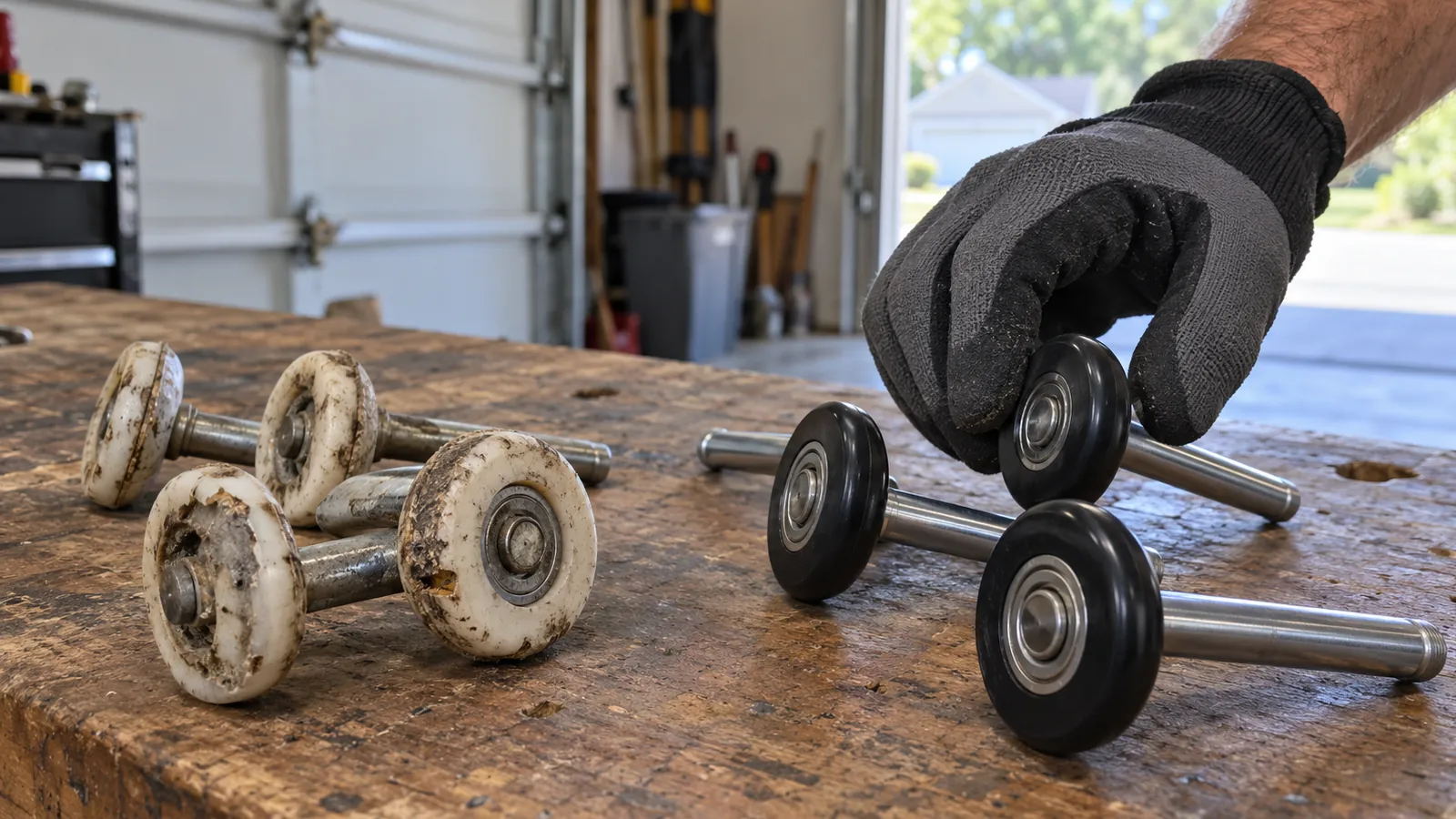
Many doors come with plain plastic or steel rollers. Plastic rollers dry out, crack and lose chunks. Steel rollers clatter in the track. Either way, the door gets louder every year.
Nylon rollers with sealed ball bearings are the common upgrade. They run much quieter and last longer. On many doors, new rollers make the biggest single difference to noise.
Replacing the bottom rollers involves the brackets that hold the cables, which are under spring tension. That part is for a technician. More on that on the rollers and hinges page.
Noise From the Opener
Chain drive openers are loud by design. A chain that's sagging or slapping the rail can sometimes be tightened. On an old opener, though, a sagging chain often means the gears inside are wearing out. Tightening it can speed that up.
If there's a bedroom over the garage, a belt drive opener is far quieter. The new opener page covers the choices.
Bigger Ways to Get a Quieter Door
An insulated door is stiffer and deadens sound, both the door's own noise and noise from the street. It also keeps rooms next to the garage more comfortable in a Durham August. See insulated garage doors.
A yearly tune-up keeps a door quiet once it's fixed. A technician lubricates everything, tightens the hardware and checks the balance.
When Noise Means Trouble
A new noise that wasn't there last week is worth taking seriously. Grinding near the top of the door, a cable rubbing on its drum or a pop from the spring area can mean a part is about to fail.
If something sounds wrong, request a call back or call (919) 555-0136.